The Complete Guide to Potty Training a Dog, Indoors and Out
Monday, October 26, 2026 05:12:12 AM America/Los_Angeles
Before You Start: One Spot, One Cue, One Schedule
Every successful potty training plan comes down to three things: a consistent spot, a consistent word, and a schedule that gets your dog there before the urge wins. Whether you have a new puppy, a rescue, or an adult dog who needs a refresher, the method is the same. What changes is how often you go and how much patience it takes.
Start by choosing the spot. If your dog will go outside, pick one patch of yard, a strip of grass by your building, or a quiet corner of the dog run, and walk to that same place every time. If your dog will go indoors, choose a permanent home for the indoor potty, ideally on a hard floor, away from where your dog eats and sleeps, and somewhere you can see it from your main living space. Dogs prefer not to go where they eat or rest, so a little distance helps.
Next, pick a cue word or phrase, like "go potty" or "do your business," and only use it at the potty spot. Say it calmly while your dog is sniffing and about to go. Over a few weeks, the word becomes a signal your dog connects with relieving themselves, which is a huge help on rainy nights or before a long car ride.
Finally, write down a basic schedule. You do not need an app or a chart, just a rough plan for when your dog wakes up, eats, plays and sleeps. Those are the moments when most dogs need to go, and building your potty trips around them is what turns guesswork into a routine.
How to Potty Train a Puppy, Step by Step
Puppies have small bladders and very little control, so the goal in the early weeks is not to teach your pup to hold it. The goal is to get them to the right spot so often that going in the wrong place rarely happens. A common rule of thumb is that a puppy can hold it for about one hour for every month of age, up to around eight hours for an adult dog. Treat that as a ceiling, not a target.
Take your puppy to their potty spot at these times, every day:
- First thing in the morning, before you make coffee or check your phone
- Within 15 minutes after every meal and big drink of water
- Right after a nap or a long rest in the crate
- After a burst of play or zoomies
- Last thing before bed, and once overnight for very young puppies
When your puppy goes in the right place, praise them right away and give a small treat within a few seconds. Timing matters. A treat handed out back in the kitchen a minute later teaches your pup that coming inside is great, not that going potty in the right place is great.
Watch for the signals that come before an accident: sniffing the floor in circles, sudden wandering away from play, whining at the door, or heading toward a spot where they had an accident before. When you see any of these, calmly pick your puppy up or lead them to the potty spot. Between trips, keep your puppy in sight or in a safe, puppy-proofed area so mistakes do not happen while nobody is watching.
Potty training is mostly about prevention. The fewer accidents your puppy has, the faster the right habit sticks.
Crate training can help too. Most dogs avoid soiling the space where they sleep, so a properly sized crate encourages your puppy to hold it for short stretches. Keep crate time age appropriate, and always head straight to the potty spot when your pup comes out.
Potty Training an Adult or Rescue Dog
Adult dogs can hold it much longer than puppies, but that does not mean they arrive house trained. A rescue may have lived outdoors, in a kennel, or in a home with different rules. Some adult dogs have only ever gone on concrete or gravel and need time to accept grass, while others were trained on pads and never learned to go outside.
Treat an adult dog who is new to your home like a puppy for the first two weeks. Take them out on a predictable schedule, use the same spot and the same cue word, and reward every success. Adult dogs usually catch on faster because their bodies are fully developed, and many settle into a routine within a week or two.
Use familiar materials when you can. If your new dog was used to going on mulch or wood chips outside, a natural surface will feel familiar indoors as well. Familiar textures and scents give your dog an easy clue about where it is okay to go, which is exactly why many dog parents choose a bark surface for their indoor spot.
If an adult dog who was reliably trained suddenly starts having accidents, talk to your veterinarian before you change your training. Urinary tract infections, kidney issues and other health problems can all show up as accidents, and no schedule will fix a medical cause.
Indoor Potty Training for Apartments, Bad Weather and Busy Days
Indoor potty training is not a backup plan or a sign that you have given up on going outside. For apartment and high-rise dwellers, people working long days, pet parents with mobility issues, and anyone with a young puppy or a senior dog, an indoor spot is often the most reliable way to keep accidents off your floors.
The key is to treat the indoor spot exactly like an outdoor one. Put it in a permanent place, take your dog to it on the same schedule, use your cue word there, and reward every success. Moving the indoor potty around the house is one of the most common reasons indoor training stalls, because your dog never learns where the spot actually is.
The surface matters more than most people expect. Dogs do not like stepping on something wet, so a pad that soaks through or a turf mat that holds puddles can make your dog avoid it. A surface that stays dry on top and smells like the outdoors gives your pup every reason to use it.

Featured Product
The Litter Box for Dogs, Standard
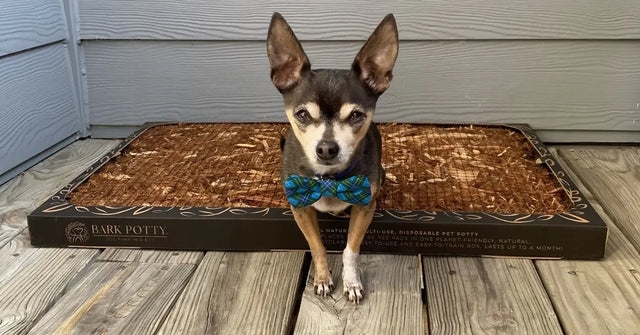
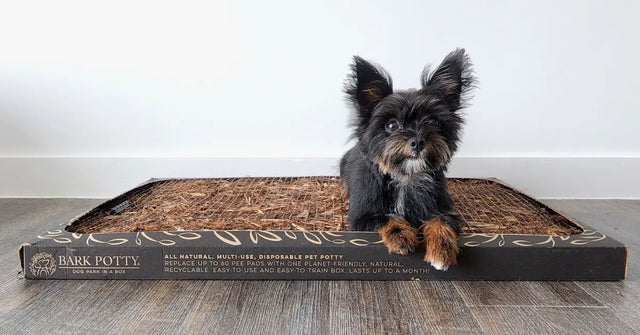
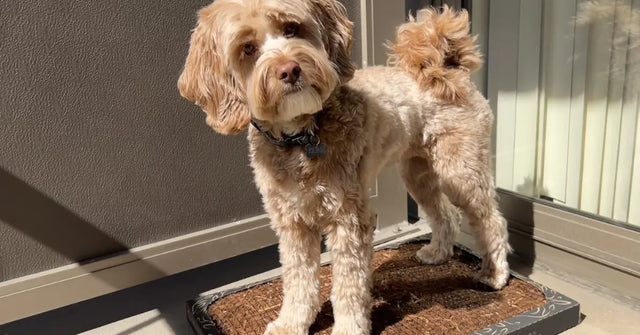
Bark Potty is natural bark in a disposable tray. Liquid drains through to the sealed tray below, so the top stays dry for paws, and most dogs recognize bark from the mulch and wood chips they already use outside.
For the first few days, take your dog to the indoor potty on leash if you need to, so the routine feels the same as a walk. Use your usual cue word, and reward the very first time they go. Most dogs pick it up quickly once the spot smells and feels familiar.
Combining Indoor and Outdoor Potty Training
Plenty of dogs use both: outside on walks, and an indoor spot for overnight, workdays, and storms. The worry many pet parents have is that offering both will confuse their dog. In practice, dogs handle two spots well as long as each one stays consistent.
Use the same cue word in both places so your dog understands that the command means "go here, now," wherever here happens to be. Keep the indoor spot in one permanent location, and keep your outdoor walks on a predictable schedule. Dogs build habits around time and place, so a clear rhythm, such as walks in the morning and evening and the indoor spot during the workday, helps them understand what is expected.
A natural surface makes the switch between indoors and outdoors easier. When the indoor spot feels and smells like the ground outside, your dog is not learning two different jobs. They are doing the same job in two places. That is why many families pair outdoor walks with a bark-based indoor potty instead of plastic pads, which can teach a puppy that soft, absorbent things in the house are fair game, including rugs and bath mats.
If you plan to move to outdoor-only later, shift gradually. Move the indoor spot closer to the door over a week or two, then out to the balcony or patio, and finally phase it out once your dog reliably signals when they need to go outside.
Handling Accidents and Setbacks
Every dog has accidents during training. How you respond decides whether they stay rare. If you catch your dog in the act, calmly interrupt with a short sound, lead them to the potty spot, and praise them if they finish there. Never scold, rub their nose in it, or punish after the fact. Dogs do not connect a punishment with something that happened minutes ago, and fear can teach them to hide when they need to go, which makes training harder.
Clean accidents thoroughly with an enzymatic cleaner made for pet messes. Regular household cleaners can leave behind a scent your dog can still detect, and that scent signals that the spot is a bathroom. Removing it completely helps keep repeat accidents from happening in the same place.
Setbacks are normal too. A move, a new baby, a change in work hours or a stretch of bad weather can all throw a dog off their routine. When that happens, go back to basics for a week or two: frequent trips, close supervision and big rewards. Most dogs get back on track quickly once the routine is predictable again.
With a consistent spot, a clear cue and a schedule built around your dog's day, potty training becomes one of the easier parts of life with a dog. Give it a few weeks, celebrate the small wins, and keep the routine steady.
Dog Potty Training FAQ
How Long Does It Take to Potty Train a Dog?
Most puppies make steady progress within a few weeks and become reliable over the next few months as their bladder control matures. Adult dogs often settle into a routine within one to two weeks. Consistency matters more than age: the same spot, the same cue word and a predictable schedule.
How Often Should a Puppy Go to the Bathroom?
Take a young puppy to their potty spot first thing in the morning, after every meal, after naps and play, and before bed, plus once overnight for very young puppies. A common rule of thumb is that a puppy can hold it for about one hour per month of age.
Can a Dog Be Trained to Go Both Indoors and Outdoors?
Yes. Use the same cue word in both places, keep the indoor spot in one permanent location, and keep outdoor walks on a regular schedule. A natural surface indoors that feels like the ground outside makes it easier for your dog to treat both as the right place to go.
Should You Punish a Dog for Having an Accident?
No. Dogs do not connect a punishment with an accident that already happened, and fear can make them hide when they need to go. Calmly interrupt if you catch them, take them to the potty spot, praise them when they finish there, and clean the accident with an enzymatic cleaner.
Dog potty training articles
More from the Bark Potty blog